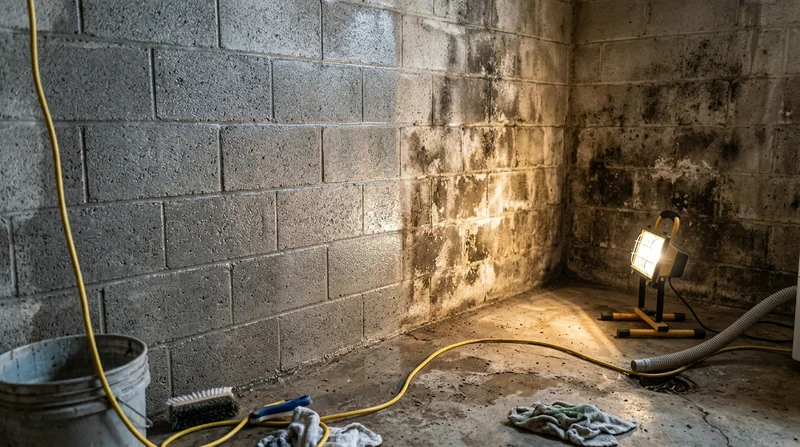




Basement Mold Remediation in Fort Smith
When you need Basement Mold Remediation in Fort Smith, the job starts with finding the water, not with spraying bleach. Fort Smith sits on shale-derived clay over alluvium, and that heavy clay holds rain for days after a storm. Downtown brick houses from the 1900s to 1940s in Midtown and Belle Grove have early stone and brick basement walls that wick moisture straight into the mortar. The 1950s to 1970s brick ranches off Rogers Avenue and Jenny Lind mostly sit on slab or raised piers, so when we do find a true basement here it is usually a partial cellar under an older home. Our work pairs containment and treatment of affected surfaces with the drainage fix that keeps the problem from coming back. We handle the moisture control, the musty smell diagnostics, and the below-grade repair that stops the cycle.
If you are dealing with recurring damp walls and a smell that returns every spring, start with a free basement inspection so we can trace the source before anyone touches a surface.
Why Basement Mold Remediation Matters in Fort Smith's Clay and River Flats
Fort Smith summers are hot and humid, spring brings heavy rain, and winter ice storms are common under that broad sky over the Ozark foothills. That combination is what drives mold growth in below-grade spaces. The ground stays wet after rain, slopes shed runoff onto low lots, and creeks flash after hard storms. On the Arkansas River floodplain flats near the old downtown, the water table rises close to footing level and pushes hydrostatic pressure against basement walls. Older brick and stone walls in Belle Grove absorb that moisture and show efflorescence, the white salt bloom that tells you water is moving through the masonry.
- Heavy clay soil traps water against the foundation for days after a storm.
- Older brick and stone basement walls in Midtown wick moisture inward through the mortar joints.
- Rising water tables on the river flats near downtown increase hydrostatic pressure at the footing.
- Downspouts that dump next to the house send roof runoff straight into the same clay.
- Walkout basements on hillside lots around Chaffee Crossing and Greenwood collect seepage at the rear wall.
Treating the visible mold without correcting the moisture source just resets the clock. The building code side of this work is handled through the City of Fort Smith building department, and you can review local permit rules at fortsmithar.gov before any structural or drainage alteration begins.
Key info: A 1920s brick house in the Belle Grove district had white efflorescence across the back wall and a musty smell in the cellar all summer. The cause was a downspout discharging within two feet of the foundation, feeding the clay that pressed against the wall. Extending the discharge and sealing the wall stopped the moisture path that was feeding the growth.
How We Run Basement Mold Remediation in Fort Smith, Step by Step
We work from the water source outward, because remediation without moisture control is wasted money. The first visit is diagnostic: we read the musty smell, check wall moisture with a meter, and look for efflorescence, bubbling paint, and staining at the base of the wall. Then we set containment so treatment does not spread spores through the house. Only after the moisture path is identified do we treat surfaces and correct the drainage that caused the problem. When the wall is taking hydrostatic pressure, an interior drain tile system is often the better answer than exterior excavation, and we say so plainly.
- We inspect the basement and foundation to find the moisture source, not just the visible growth.
- We set up containment and negative air so the work area stays isolated from living space.
- We remove or treat affected building materials and clean the surfaces that can be saved.
- We correct the water path with grading, downspout extensions, crack injection, or perimeter drainage.
- We verify dryness with a moisture meter before we close out the job.
The order matters because a treated wall that stays wet will grow again within one humid Fort Smith summer.
Key info: A 1990s walkout basement in a Chaffee Crossing subdivision showed growth along the rear wall every June. The hillside lot shed runoff against that wall, and the fix was a combination of regrading, a window well drain, and wall sealing. The growth did not return the following spring.
Remediation Approaches We Use Below Grade
Not every basement needs the same treatment, and the right method depends on the wall material and where the water is coming from. Brick and stone walls in older Fort Smith homes behave differently from poured concrete in newer subdivisions. We match the approach to the wall and the moisture path.
| Approach | Description | Best for |
|---|---|---|
| Surface treatment with moisture correction | Containment, cleaning, and treatment of affected surfaces paired with a drainage fix. | Light growth on walls where the water source is a downspout or grading issue. |
| Crack injection plus remediation | Epoxy or polyurethane injection closes the seepage path, then surfaces are treated. | Poured concrete walls with visible vertical cracks and damp staining. |
| Interior perimeter drain plus treatment | Drain tile and sump basin relieve hydrostatic pressure, then surfaces are cleaned. | Walls wet across the whole base from rising water table or heavy clay. |
| Exterior waterproofing plus remediation | Membrane and footing drain installed from the outside, surfaces treated inside. | Active seepage where excavation is practical and the wall needs full protection. |
| Dehumidification and ventilation control | Mechanical moisture control keeps below-grade humidity in check after cleanup. | Basements that stay humid even after the water intrusion is corrected. |
Each of these approaches is chosen after we confirm where the water enters, not before.
Basement Mold Remediation Cost in Fort Smith: What to Expect
Most residential remediation projects in Fort Smith start around $1,500, and that figure covers a contained work area, treatment of affected surfaces, and the diagnostic work that identifies the moisture source. The price moves up with the size of the affected area, the number of rooms involved, and whether the fix requires crack injection or a drainage system. A small patch on one wall in a Jenny Lind ranch is a different job from a full cellar in Belle Grove with wet stone walls. We do not quote a final number until we have seen the basement, because a phone estimate on this work is a guess.
Getting two or three estimates is smart, and you should ask each contractor whether the moisture correction is included or billed separately. Remediation alone on a wall that still leaks is money spent twice. Our full pricing overview is on the pricing page, and we walk through the variables on site before any work is scheduled.
What to Look For When Hiring a Basement Mold Remediation Contractor Near Fort Smith
Ask for proof of licensing and insurance before anyone starts, and get a certificate of insurance sent to you directly. Ask how the contractor will find the moisture source, because a company that only treats surfaces will be back next spring. Check references from jobs in Fort Smith or the surrounding towns, and ask whether the containment and the drainage correction were both part of the scope. Confirm who pulls any permit required for structural or drainage work through the City of Fort Smith building department, and check with your HOA if you live in a subdivision around Chaffee Crossing or Greenwood before altering grading or exterior drainage.
If you are comparing contractors near Fort Smith, our contact page is the fastest way to schedule an inspection and get a written scope.
Basement Mold Remediation in Fort Smith: Pricing Guide
| Service | Price | Details |
|---|---|---|
| Targeted surface remediation | Starting at $1,500 | Containment, treatment of affected surfaces, and moisture source diagnostics for a small area. |
| Remediation plus crack injection | Starting at $2,200 | Includes epoxy or polyurethane injection of seepage cracks before surfaces are treated. |
| Remediation plus interior drain tile | On estimate | Priced after on-site review because drain length and sump location drive the scope. |
| Full basement with multiple rooms | On estimate | Larger affected areas need an on-site look to size containment and treatment properly. |
| Travel | Included | In Fort Smith and surrounding areas, no separate call-out or mileage fee. |
| Estimate | Free | Response within 24h at (479) 755-9567, no obligation to book. |
Indicative pricing, the exact cost depends on square footage, finish, and site access. Free personalized estimate within 24h at (479) 755-9567.


