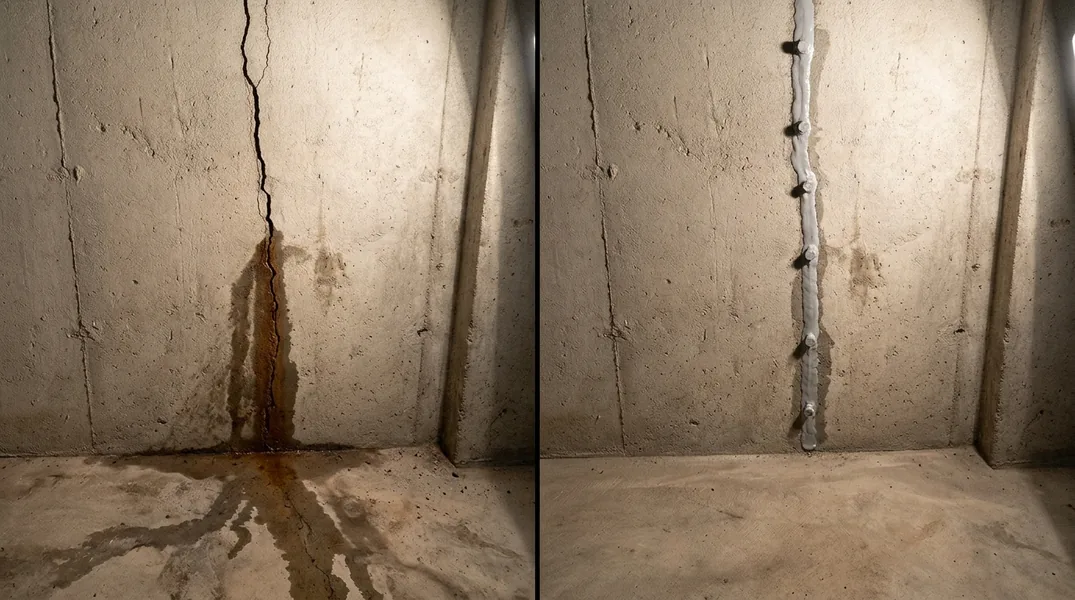
The Ground Beneath Fort Smith: A Recipe for Foundation Trouble
If you live in Fort Smith, you already know that the natural beauty of the Arkansas River Valley comes with some geological quirks. One of the most significant for homeowners is the soil itself. Much of the area sits on heavy clay and shale deposits that behave very differently from the sandy or loamy soils found in other parts of the country. These soils are dense, they hold water like a sponge, and they expand and contract dramatically with the seasons. That constant movement puts enormous pressure on foundations, and over time, it leads to the cracks and leaks that many local homeowners eventually face.
Understanding this soil behavior is the first step toward protecting your home. When clay absorbs water during a wet spring, it swells and pushes against foundation walls. When the summer heat bakes that same clay dry, it shrinks and pulls away from the foundation, leaving voids. This cycle repeats year after year, and each repetition weakens the structure a little more. Shale, which is common in the region's bedrock, adds another layer of complexity because it can weather and soften when exposed to moisture, reducing its ability to support a foundation properly.
Why Fort Smith Foundation Cracks Keep Coming Back
Homeowners across the region often tell us the same story: they patch a crack in the basement wall, and a year later, a new one appears a few feet away. This is the hallmark of Foundation Waterproofing problems driven by soil movement rather than a single isolated defect. The cracks are symptoms, not the disease. If the soil around your home is still expanding and contracting, sealing the crack without addressing the underlying water management issue is like putting a bandage on a wound that never heals. The pressure will simply find another weak point.
Fort Smith foundation cracks typically show up in a few recognizable patterns. Vertical cracks in poured concrete walls are often the result of shrinkage and settling, while diagonal cracks that start near the corners of windows or doors can indicate more serious differential settlement. Horizontal cracks are the most concerning because they often signal hydrostatic pressure from saturated soil pushing inward against the wall. Any of these patterns deserves a professional evaluation, especially if you also notice sticking doors, uneven floors, or moisture along the base of the wall.
Clay Soil Basement Leaks: How Water Finds Its Way In
Clay soil basement leaks are one of the most common calls we receive in Van Buren and throughout the Fort Smith area. The reason is simple physics. Heavy clay drains very slowly, so when it rains, water accumulates in the soil around your foundation instead of soaking away. That saturated soil creates hydrostatic pressure, which is a fancy way of saying water is pushing hard against your basement walls from the outside. Given enough time, water will exploit even the tiniest hairline crack, the seam where the wall meets the footing, or the porous surface of concrete block.
Once water enters, it can cause a cascade of problems: damp musty odors, efflorescence (the white powdery substance on walls), mold growth, and damage to stored belongings. In more severe cases, persistent moisture can weaken the structural integrity of the foundation itself. This is why Basement Waterproofing in this region has to account for soil conditions, not just the visible leak. A solution that works in sandy soil may fail completely in Fort Smith's clay, which is why local expertise matters when you are choosing a contractor.
Foundation Settling and Arkansas Soil Movement: What Homeowners Should Watch For
Arkansas soil movement does not always announce itself with a dramatic crack. Sometimes the early warning signs are subtle. You might notice a door that suddenly sticks in the summer but swings freely in the winter, or a crack in the drywall above a doorway that seems to grow a little each year. These small changes are often the first indicators that foundation settling is underway. In a region where the soil expands and contracts so dramatically, it is not unusual for a home to experience some movement, but movement that continues unchecked can lead to costly structural repairs.
Foundation settling in Fort Smith is often exacerbated by poor drainage around the home. Downspouts that discharge too close to the foundation, grading that slopes toward the house instead of away from it, and gutters that overflow during heavy rain all contribute to saturated soil. When one side of the foundation sits on wet, swollen clay and the other side sits on dry, shrunken clay, the home can actually tilt slightly. This differential movement is what causes the diagonal cracks and uneven floors that signal a foundation in distress. Correcting the drainage and managing the soil moisture is essential to stopping the progression.
Basement Waterproofing Near Me: When to Call a Professional
If you have read this far and recognized your own home in these descriptions, it is probably time to talk to someone who understands local soil conditions. A professional assessment can distinguish between cosmetic cracks and structural warning signs, and it can identify the water management issues that are driving the problem. At Fort Smith Waterproofing, we start with a thorough inspection of your foundation, drainage, and soil conditions so we can recommend a solution that actually addresses the cause. You can call us at (479) 755-9567 or request a free estimate to get started.
Depending on what we find, the solution might involve an Interior Drain Tile System to manage water that reaches the basement, or Exterior Basement Waterproofing to stop water before it penetrates the walls. In some cases, a combination of approaches works best. Every home is different, and the right plan depends on your specific soil, drainage, and foundation type. If you are in Barling or Greenwood, the same clay and shale challenges apply, so do not wait until a small crack becomes a major repair. Reach out for a professional evaluation and get peace of mind before the next rainy season.
Looking for a professional basement waterproofing contractor in Fort Smith? Fort Smith Waterproofing responds fast for all your basement waterproofing needs.
Get a Free QuoteOur services: Basement Waterproofing · Interior Drain Tile System · Exterior Basement Waterproofing