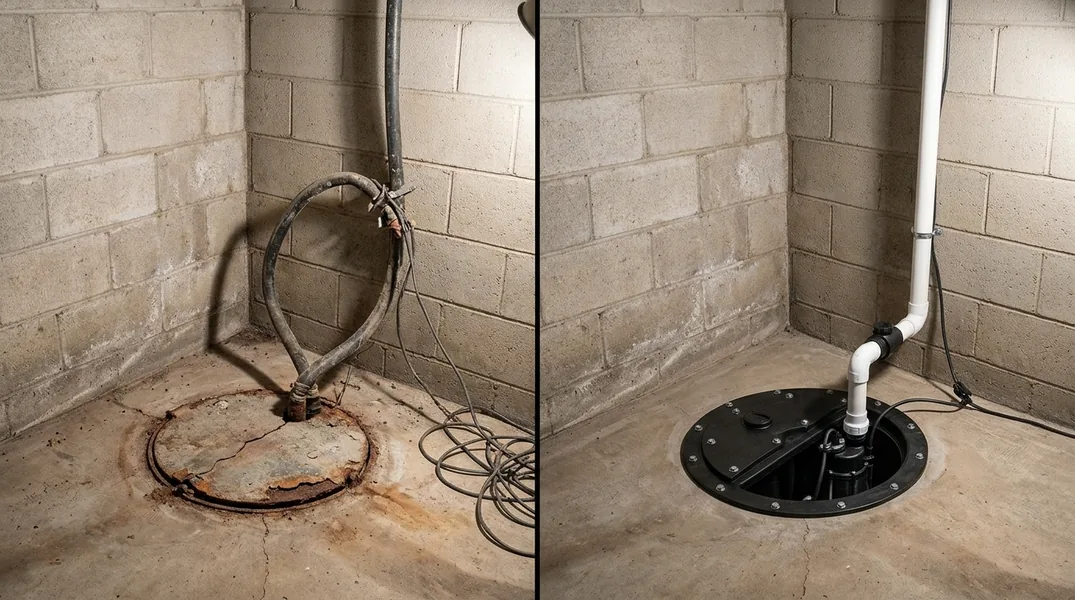
Why Spring Rains Put Your Sump Pump to the Test in Fort Smith
Spring in Western Arkansas brings a familiar pattern: days of steady rain, followed by short bursts of intense storms. For homeowners in Fort Smith, that means your sump pump shifts from occasional use to round-the-clock duty almost overnight. The soil around your foundation becomes saturated, hydrostatic pressure builds, and groundwater pushes against your basement walls and floor. Your sump pump is the first line of defense against that pressure, moving water away before it can pool and cause damage.
If your pump has been sitting idle all winter, it deserves a careful check before the heavy rains arrive. A pump that hesitates, runs loudly, or fails to kick on during a spring storm can leave you with standing water, ruined storage, and costly repairs. Taking an afternoon to inspect and test your system now is far easier than dealing with a flooded basement later. For homeowners who want a comprehensive assessment, Basement Waterproofing professionals can evaluate your entire drainage setup, not just the pump itself.
Sump Pump Maintenance Checklist Before the Rainy Season
Start by unplugging the pump and removing the lid from the sump pit. Look inside for debris, silt, or gravel that may have accumulated over the winter. A clogged intake screen or a pit full of sediment can prevent the float switch from triggering, which is one of the most common reasons pumps fail during storms. Clean the pit thoroughly and make sure the float moves freely without obstruction. While you are in there, check the discharge pipe for cracks or loose connections and confirm that the water is directed well away from your foundation.
Next, test the pump by pouring a bucket of water into the pit until the float rises. The pump should activate promptly and empty the pit within a reasonable time. Listen for unusual grinding or rattling sounds, which can indicate a worn impeller or a failing motor. If your pump is more than seven to ten years old, consider replacing it proactively rather than waiting for a failure. Older pumps may still run, but their flow rate declines over time, and they are more likely to quit during the exact storm when you need them most. A professional can also check your Foundation Waterproofing setup to ensure water is being managed correctly before it reaches the pit.
Don't Overlook the Sump Pump Check Valve
The Interior Drain Tile System feeds water into your sump pit, and the check valve is what keeps that water from flowing backward once the pump shuts off. This small component is easy to ignore, but a stuck or failed check valve can cause water to cycle back into the pit, forcing the pump to run repeatedly and burn out prematurely. It can also allow water to sit in the discharge line, where it may freeze or stagnate. During your spring maintenance, inspect the valve for mineral buildup and test it by watching whether water drains back into the pit after the pump stops.
If the valve is more than a few years old or shows signs of corrosion, replacing it is inexpensive and takes only minutes. Make sure the replacement valve is installed in the correct orientation, with the arrow pointing away from the pit. A properly functioning check valve reduces strain on the pump, extends its lifespan, and helps your system handle the heavy volume of a spring storm. Homeowners in Van Buren and surrounding areas face the same conditions, so this step is worth doing regardless of where your home sits.
Battery Backup Sump Pump: Your Safety Net During Spring Storms
Spring storms in Western Arkansas frequently knock out power, and a sump pump without a backup is useless the moment the electricity goes out. That is exactly when water intrusion is most likely. A battery backup sump pump runs on a charged battery and kicks in automatically when the primary pump loses power or fails. It is not meant to replace your main pump, but it provides critical protection during the hours or days before power is restored.
Test your backup system now by simulating a power outage or using the test button on the unit. Check the battery charge and terminals for corrosion, and confirm the backup pump actually moves water. Batteries typically last three to five years, so replace yours if it is aging or will not hold a charge. If you do not have a backup system yet, spring is the ideal time to install one. A qualified technician can size the system to your pit and discharge setup, and you can request a free estimate to understand your options before storm season arrives.
Storm Basement Flooding: When to Call a Pro Near Me
Some sump pump problems are easy to handle on your own, but others point to deeper issues with your drainage system. If your pump runs constantly, cycles on and off every few minutes, or cannot keep up during heavy rain, the problem may not be the pump itself. It could be an undersized pit, a failing check valve, or a drainage system that is not capturing water efficiently. Storm basement flooding often reveals weaknesses that are invisible during dry weather, and ignoring them can lead to repeated water damage and mold growth.
If you have noticed damp spots, musty odors, or water stains along your basement walls, it is worth having a professional inspect your entire system. A local expert can identify whether you need repairs to your Exterior Basement Waterproofing or an upgrade to your interior drainage. Homeowners in Barling and Greenwood can call Fort Smith Waterproofing at (479) 755-9567 to schedule an inspection before the next round of spring storms. Getting ahead of the problem now is far less expensive than repairing a flooded basement later, and you can review pricing ahead of time so there are no surprises.
Looking for a professional basement waterproofing contractor in Fort Smith? Fort Smith Waterproofing responds fast for all your basement waterproofing needs.
Get a Free QuoteOur services: Basement Waterproofing · Interior Drain Tile System · Exterior Basement Waterproofing